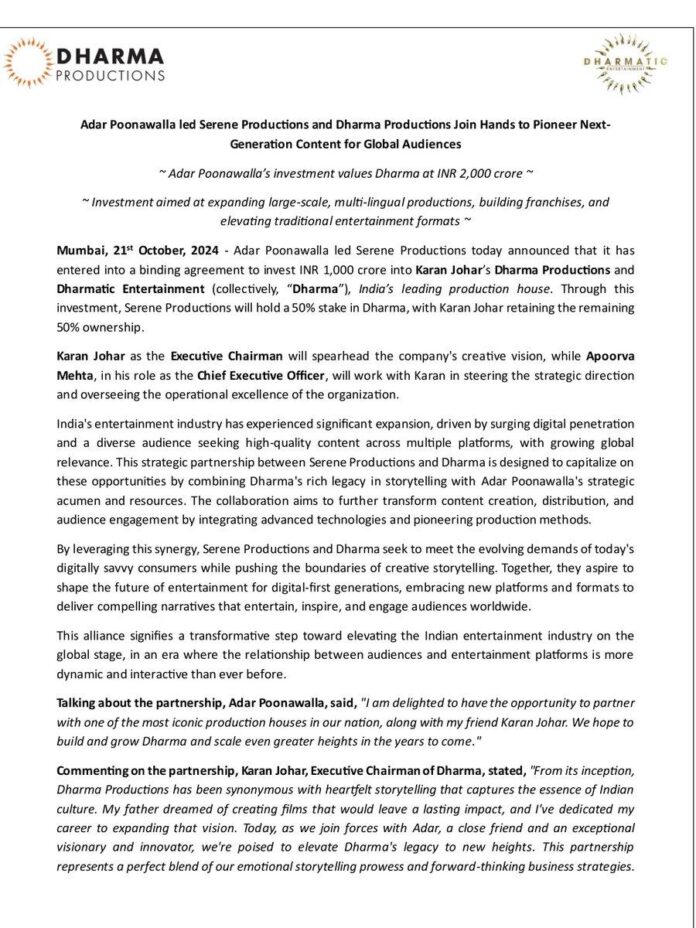

Serum Institute CEO Adar Poonawalla has reportedly acquired a 50% stake in Karan Johar’s Dharma Productions for ₹1,000 crore, implying a total company valuation of ₹2,000 crore. That headline-grabbing number demands scrutiny. Across entertainment, sky-high valuations have often masked weak cash flows, opaque accounting or unrealistic growth assumptions. There are familiar cautionary tales — companies that dazzled on paper then stumbled: STX, Relativity, WeWork and even corporate scandals like Enron. In Bollywood, big box-office claims and creative accounting can hide profitability problems. Before accepting the ₹2,000 crore tag, investors and observers should ask hard questions about revenue, debt, content pipeline and governance.
Serum Institute buys into Dharma , what the ₹2,000 crore claim really means

At face value, paying ₹1,000 crore for half of Dharma sets a ₹2,000 crore valuation. That begs the question: what metrics justify this price? Dharma’s assets include a film catalog, production pipelines, distribution deals, talent relationships and brand partnerships. Private media valuations are often driven by projected hit films, expected streaming rights and ancillary income , forecasts that are inherently volatile. Without audited public accounts and transparent debt disclosure, the number could reflect optimism or a strategic premium from a buyer with broader aims. Analysts will want to see EBITDA, free cash flow, debt levels, and confirmed deals for upcoming releases before calling this a sensible market valuation.
Echoes of STX and Relativity: When entertainment valuations unravel

History shows entertainment valuations can be fragile. STX Entertainment, launched with big ambitions and stellar backers, later faced financing strain and had to restructure some deals amid lower-than-expected returns. Relativity Media similarly promised rapid content-driven growth but ultimately sought bankruptcy protection when its film slate and financing failed to deliver. These cases underline that projected box-office performance and distribution deals are volatile and hinge on a string of hits. For buyers and analysts, past examples mean being skeptical when a valuation relies heavily on anticipated blockbusters rather than steady recurring revenues or diversified distribution income.
WeWork and Enron: corporate warning signs worth heeding

WeWork’s surge to a private valuation of nearly $47 billion , later slashed after a failed IPO , remains a cautionary tale about growth narratives overriding fundamentals. Enron went further: creative accounting, off‑balance‑sheet entities and opaque financials hid losses until the façade collapsed. Together, they teach clear lessons for media deals: watch for overly aggressive revenue projections, reliance on related-party transactions, complex off‑balance liabilities, and governance weaknesses. A ₹2,000 crore tag without transparent financials could conceal similar problems. Independent audits, clear cap tables, director independence and conservative cash-flow projections are essential to separate genuine value from smoke and mirrors.
Bollywood's box-office math: big numbers, thin margins

Bollywood operates with its own accounting eccentricities. Publicity often touts box‑office collections while production budgets, marketing spends (P&A), and distributor percentages remain opaque. Producers rely on pre‑sales of satellite and OTT rights, brand tie‑ups and overseas distribution to underwrite risk , but these can be overvalued on paper. Big star salaries and front‑loaded deals inflate costs, and 'blockbuster' labels focus on gross collections rather than net profitability. That creates a pattern where headline revenues mask thin margins. For a ₹2,000 crore valuation, stakeholders need clarity on how Dharma’s revenues break down across theatrical splits, streaming guarantees, brand deals and debt obligations.
Gems Of Bollywood and the case for transparency

Investigations like those from Gems Of Bollywood have pulled back the curtain on financial practices in the industry, flagging opaque deals, round‑tripping and aggressive revenue projections. Their work suggests that headline valuations often omit liabilities such as deferred payments, profit participation clauses and contingent distribution guarantees. Independent reporting is essential because private media companies can present rosy forecasts to justify premiums. Buyers with deep pockets , like Poonawalla , may have strategic reasons for paying a premium, but buyers and regulators alike should demand due diligence reports, detailed cash-flow statements and independent valuations to ensure that the glitter of a big number isn’t hiding structural weaknesses.
Investor checklist: how to test whether a valuation is real

If you’re sizing up the Dharma deal, here’s a practical checklist: ask for audited financials for at least three years, detailed EBITDA and free‑cash‑flow reconciliations, cap table and debt schedules, and the exact terms behind pre‑sold distribution or streaming deals. Review P&A and marketing commitments per title, talent payment structures, and any contingent liabilities or earn‑outs. Ensure governance safeguards for minority owners, independent board representation and clear exit clauses. Stress‑test valuations under conservative box‑office scenarios, and commission an independent valuation or forensic review if numbers don’t add up. That approach separates real strategic value from speculative headline pricing.